
Exploring Misty Yangshuo.

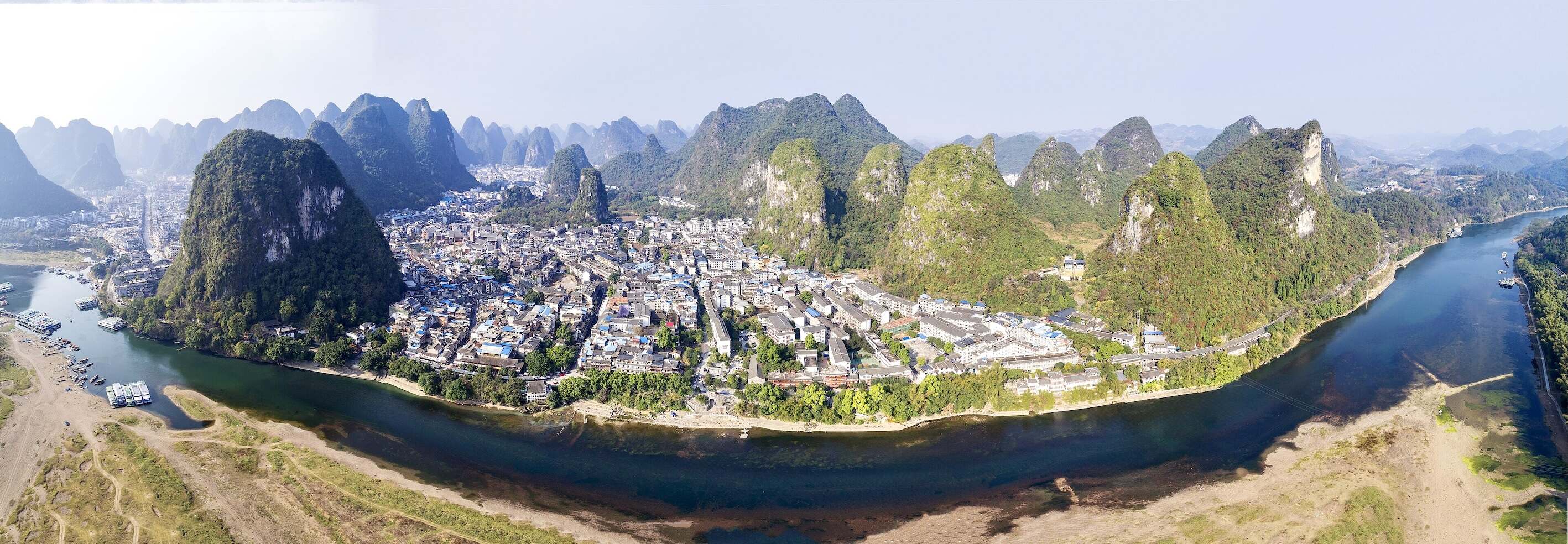
Exploring Misty Yangshuo, Guangxi Autonomous Province, China.
May 2010.
Cover photo courtesy of Chensiyuan.
As I arrived in Yangshuo, so often described as the most beautiful place in China, I carried a quiet caveat with me. It was something I’d read in a travel guide months earlier: this might be the most spectacular thing you see in the country… so long as the weather cooperates.
Ah, nuts.

Exploring Misty Yangshuo.
The rain began halfway through the hour-and-a-half bus ride from Guilin. By the time I stepped off and tried to get my bearings, the streets were already partially flooded.

Exploring Misty Yangshuo.
Luckily, my hotel was close. I took a shower, dried off and paused to rethink the day. The plan had been simple: hire a bike and head straight out into Yangshuo’s rural backroads. But the rain had other ideas, and was now falling hard and relentless.
There wasn’t much to do but shrug it off, keep disappointment at arm’s length, and wait for it to ease. Within the hour, it did, and I took my opportunity to take a stroll around town.

Exploring Misty Yangshuo.
Yangshuo’s story stretches back over 1,400 years. Formally established as a county during the Sui Dynasty, when the region was drawn into China’s administrative system, for centuries it remained a drowsy backwater sustained by farming and river trade.
Exploring Misty Yangshuo.

Views over the town and its surrounds from the TV Tower.
Today Yangshuo is home to around eighty thousand people. Its modern identity as a tourist destination took shape in the 1980s as travellers, both domestic and foreign, began drifting in, drawn by its surreal karst landscape and low cost of living.

A small landscaped garden in the town.
Wherever I wandered that afternoon, the karsts were ever-present. Indeed they rose above the market where vendors peddled souvenirs, handmade crafts and local snacks. Even here, low and close, the peaks loomed: half-lost in mist, setting the tone for the adventures that lay ahead.

Exploring Misty Yangshuo.
As I made my way down West Street, a man passed with a bamboo yoke, a basket brimming with freshly picked produce. He glanced back once, then carried on, a charming reminder that Yangshuo is still a working town that holds on to some of its old ways.

Even my camera lens fogged slightly, giving the photos a soft and damp, dreamlike haze.
It didn’t take long to make a full loop of the town. As pretty as Yangshuo is, there wasn’t much to it back then. When the rain returned, I ducked into a cosy café with a traditional wooden façade. Later, I wandered through a landscaped garden and along a quiet, water-facing street by the Li River.
Rain, Rain, Go Away…

Exploring Misty Yangshuo.
Eventually, I found myself at a restaurant and cooking school called Cloud 9. A well-known local institution, often said to be the best in town for regional dishes, it didn’t take long to book a class with one of their chefs, Jane.

Cloud 9.
As Jane explained, Cloud 9 gives visitors the chance to prepare a traditional three-course meal. Presented with a range of options, I decided to try my hand at deep-fried stuffed eggplant with pork and stuffed green peppers with pork, before finishing with sizzling beef and mixed vegetables.

McDonald’s from the cooking school’s second floor balcony.
Before we began, Jane explained that we’d first head to the local farmers’ market to pick up the ingredients. It was vast: three covered halls housing more than two hundred vendors. She knew exactly where to go, guiding me efficiently from stall to stall as we picked out the freshest peppers and choice cuts of beef.

Exploring Misty Yangshuo.
In truth, it wasn’t a pretty place. Along the way, I spotted plenty that did little to whet my appetite for the meal ahead. One stall specialised in pig’s ears, with tray after tray of dark, rubbery slabs that turned my stomach.
Yangshuo Farmers’ Market.

Pigs’ ears, anyone?
On the way out, we passed a small, cramped side room packed with caged animals. I wish I hadn’t seen it. Rabbits, ducks, geese and chickens, piles of them. My heart sank when I caught sight of the dogs, and the images stayed with me long after we returned to Cloud 9.

Sadness.
Back at the restaurant, Jenny insisted I put on one of their branded aprons and a somewhat ridiculous chef’s hat. Then she guided me through each dish with patience, care, and good-natured humour at my shaky knife work.

Jane in action. Exploring Misty Yangshuo.

Yours truly not being careful with the knife.
I sliced carrots, chopped chives and diced onions, doing my best to cut the pork into fine strips. This was a point Jenny was particularly strict about. “Finer!” she insisted, again and again, as I flailed.
I cut the eggplant into open pouches and added teaspoons of salt, sugar, white pepper, cornflour, oyster sauce and the meat, before dipping them into Jenny’s pre-made batter and lowering everything into the hot oil of a waiting wok.

Exploring Misty Yangshuo.
At long last I took my first bite—a satisfying reward for the effort.

Decent.
Emboldened by my eggplant success, I muddled through the stuffed peppers and sizzling beef before retreating to the balcony to tackle it all as best I could. There was so much food I had no chance of finishing it all, though I certainly gave it my best shot.
Exploring Misty Yangshuo.

Cloud 9 Restaurant, Yangshuo.

Sizzling beef!

Happiness is a Warm Dish.
My second day in Yangshuo was also my last, so there were no excuses for avoiding the bike trails. It was now or never, even if Mother Nature chose to throw rain, snow, hail, thunder and lightning at me.
I woke early, grabbed a light breakfast, and headed to a bike hire shop to choose a trusty steed. Pedalling down West Street, I was struck by how quickly—within fifteen minutes—the town fell away, and I found myself deep in the rural heartland of Yangshuo County.

Exploring Misty Yangshuo.
Misty, moody and with the rain just about holding off, I suppose I could consider myself lucky with how things turned out that day. The peaks, though partly shrouded, were breathtaking: sheer, green-cloaked towers pushing up from the earth at improbable angles.

Exploring Misty Yangshuo.
Pausing occasionally to catch my breath and take photo after photo, I cycled onwards, passing narrow streams, wooden farmhouses and patchworks of rice fields. While I did not come upon one other cyclist, I did spot a number of farmers working the land.
Exploring Misty Yangshuo.

Exploring Misty Yangshuo.
About an hour into my ride, I reached the tiny village of Xiatang, a farming community of little more than a dozen weathered homes set among rice paddies and vegetable plots. Beside a slow, meandering stretch of the Yulong River sat a cluster of bamboo raft stations. With no one else around, the dozen or so vendors quickly turned their attention to me.

Xiatang.
I chose the least pushy of them, a quiet, smiley man with a gentle manner, who helped me and my bike aboard before easing us out into the murky green waters of the Yulong. Ahead, the misty karst peaks seemed to beckon.

Exploring Misty Yangshuo.
As we floated lazily down the Yulong, I couldn’t stop grinning. The weather hadn’t quite turned out as I’d hoped, but this felt like one of those undeniably special travel moments. Here I was, in the middle of nowhere, suspended in a landscape so unique and serene it more than made up for those long, difficult months working in Beijing for Trudy.

Exploring Misty Yangshuo.
Those towering karsts—positively Tolkien-esque—came and went as we drifted downstream. For the most part, we saw very few other rafts, though one passed by carrying a father and daughter. I managed to catch a sneaky shot of the girl gazing pensively into the distance.
On the Yulong.

Exploring Misty Yangshuo.
I also got a huge kick out of a floating café and convenience stall, improbably moored in a quiet, hard-to-reach bend of the river. It felt almost absurdly isolated. I couldn’t help but feel a twinge of sympathy for the woman running it, and wondered how many customers she saw in a day. In the end, I asked my captain to steer us over so I could at least buy a bottle of water.

Exploring Misty Yangshuo.
Finally, my raftsman dropped me and my bike back in Xiatang, from where I cycled on to the nearby village of Yulong. The place was tiny—almost a replica of Xiatang, but without the raft stations. It did, however, have one landmark worth seeking out: the characterful, Ming-era Yulong Bridge.

Exploring Misty Yangshuo.
Built from locally quarried stone, this single-arch structure has served locals for centuries as a crossing point between the Yulong’s many settlements. That afternoon, the bridge was busy, with locals flurrying to and fro. I settled into a quiet spot and watched them come and go, capturing a few sneaky shots.

Exploring Misty Yangshuo.
Down by the Yulong, I happened upon a shack restaurant with a few plastic tables and chairs. The proprietors: mum, dad and daughter, were washing chicken carcasses in the water. It was hardly the most appetising scene and yet it did remind me how hungry I’d become.
Exploring Misty Yangshuo.

Xiatang.
Against my better judgement, I decided to give the place a chance. Bolder still, I ordered a large bowl of what the English menu described as Rustic Chicken. It arrived chopped and bone-in, swimming in a dark, garlic-and-soy sauce with flashes of green pepper and spring onion. It was simple, indeed rustic and unmistakably local. Most importantly it was delicious, far better than my blurry photo suggests.

Exploring Misty Yangshuo.
It took me just over two hours to get back to Yangshuo town. I dropped off the bike, grabbed a bite and a beer at Cloud 9, and enjoyed an early night at my hotel. The next day would bring a trip out to two of Guangxi’s most historic and culturally distinctive mountain towns, and the small matter of the iconic rice terraces that wrap around them.
Until then…

Exploring Misty Yangshuo.
Like this? Why not check out more of my travel articles from across China.
I’ve written a short story series called Challenged In China.
I’ve been living, working and traveling all over the world since 2001. So why not check out my huge library of travel reports from over 40 countries.



44 Comments
A shame about the rain that first day, though the cookery class looks a fun way to have passed the time till it stopped. But I reckon those amazing karst peaks might actually look better in this misty weather than in bright sunshine!
You might be right Sarah, though I remember how disappointed I was at the time that it wasn’t sunny and warm. But yes, misty and moody is extremely atmospheric for this landscape. Thanks for reading and kicking off the comment thread.
What a very special landscape Leighton, it’s like a whole other world unto itself. I like the mix of borrowed photography and the somewhat grainy nostalgic shots from your own visit; the combination gives everything greater authenticity if that makes any sense. The food looks fabulous, although I can empathise completely with that depressing market: they are truly sights you don’t want immediately before cooking and eating. Yulong Bridge could be something out of a Chinese poem, while my favourite capture is pensive girl.
Thanks James. My photos from this period are probably the worst of my entire travel library, so I feel the article needed some proper photography to show just how gorgeous the landscape is. Yulong Bridge blew my mind: I had never seen anything quite like. Cheers!
Amazing misty adventure! I enjoyed your rich descriptions and the mix of photos. Thanks for sharing!
Thanks Chuckster, appreciate the read and comment 🙂
A grand adventure in a beautiful place. Lovely shot of the little girl on the boat with the flower crown, I hope life has been kind to her. When I see shots like that I always think, ‘where are they now?’
The dogs at market though. Best not over thinking about them.
Hi Helen, I often look at photographs of people I’ve shot and think the very same thing. The dogs… yeah, such sadness but what can you do? Thanks for reading 🙂
Gorgeous! Despite the weather not cooperating with you on the first day, you got lucky with better weather the second day in order to go out and explore all that Yangshuo has to offer. I love pig’s ear, but I can see it (as well as other local delicacies) being an acquired taste. The backdrop is stunning, similar to Guilin’s, and I’m glad you had a lovely, albeit short, stay in the area!
Yes, very similar landscapes across Guilin and Yangshuo, though I would say it’s just that little bit more dramatic in Yangshuo. I actually can imagine that pig’s ear is quite tasty, but I couldn’t bring myself to try it. The same way a lot of people feel about haggis I’m guessing. Thanks for reading, Rebecca!
What a picturesque place and worth getting a bit wet to venture beyond the town. It reminded me of Vietnam’s Nimbin.
Oh yes, it has a strong resemblance to Ninh Binh, totally see that.
I’m also going to pass on the pig ears. The rest of the food you cooked, however, sounds tasty! And what a pretty location for the town. I love the scenery, with the endless hills.
Thanks, Diana. 🙂
Such a beautiful landscape, rain or shine Leighton. While disappointing to see all that rain, it did live up to its misty tag. Great call on the cooking class. I will pass on the pig ears thanks and turn my eyes away from the caged animals. Some great street/road/raft life photos. Love the bike and float idea. Thanks for sharing and have a great week. Allan
Thanks Allan, I do sometimes daydream about returning to Yangshuo with Sladja and today’s camera technology. Who knows, maybe we’ll do it one of these years.
Live animals….. at least the food was fresh!
🙂
A dream destination, Leighton. That backdrop is just staggering xx
Isn’t it just. Thanks for stopping by, Jo, there’s more from this stunning region in this Sunday’s post.
What a uniquely beautiful area! The first picture of you in the rain gave me a chuckle. Glad the weather cleared up a bit! I can imagine seeing the animals in cages was incredibly distressing.
Thanks Lyssy, it was posed misery of course but a photo that still makes me smile over sixteen years later. Unlike that caged animal shot.
“Tolkien-esque” describes it perfectly, and that’s what I was thinking as I read your commentary and enjoyed your photos. I was glad to hear that the weather cleared so you could enjoy the countryside. Your photos have wonderfully captured the essence of the rugged landscape. Like you, I would definitely pass on the pigs ears; 🤢! Wonderful post, Leighton.
Thanks, Tricia. Tricky weather conditions turned out to be a recurring theme across Guangxi, as you’ll see in this Sunday’s post 🙂
Superb landscape, reminiscent of our days in Nong Khiaw, Laos, which has similar karst peaks
Cheers Phil, I can definitely see similarities between Yangshuo and Nong Khiaw.
It looks quite charming, even with the rain and mist. I imagine the city has changed quite a bit from 2010 until now. I see a lot of mixed reviews now about experiences but it looks charming and I will certainly love to visit.
Hey Amarachi, yes Yangshuo must have gone through immeasurable change these last sixteen years. I can only imagine what the town itself looks like now, though I’m sure that fabulous scenery remains untouched. By the way, I have been meaning to tell you for several months, I am unable to access your website as I get warning pop ups that block me from entering saying that the site contains malicious malware 🙁 Have you heard anything about this from other users?
Thanks for letting me know, Leighton. I haven’t received this feedback from anyone recently, but I’m now looking into it to figure out what’s triggering the warning. Hopefully I can narrow down the root cause and get it sorted out soon.
It looks absolutely beautiful, even with the rain. The landscape is really striking.
Thanks, Hannah.
There’s something nice about the rain- a little wet sure, but it definitely gave you the authentic experience. And that misty effect with such a lovely area just adds to that. I love that you got to try your hand at cooking there. The market looks really interesting to wander through…but hard no to pigs ears.
Hey Meg, there’s also something nice about escaping the rain to go and cook, doing your work as the raindrops beat against the windows and roof. Thanks for reading about my time in Yangshuo.
I didn’t know the term karst, but certainly recognize the shapes of the mountains from watercolor paintings, so beautiful! Shame about the rain but it made it more atmospheric. The shot of the street with shops looks alluring. (We won’t talk about the dogs or pigs ears.)
Karst is such a great word, don’t you think? Much better than “cage”, that’s for sure. Thanks for stopping by Ruth.
It is. I just looked it up in Chinese in Google Translate and it sounds like a Chinese pronunciation of the same word. 😊
another splendid corner of china conquered leighton. it seems to me that guilin works as a manner of warm up for yangshuo where the scenery gets even more dramatic. props to you for biking through the region solo, what an adventure. even more props for diving into the chicken dish moments after seeing them wash chickens in the river. the food looks wonderful and i must say not at all reminiscent of the slop they serve at my local chinsese retsurant
Cheers, Stan. I sometimes wonder where that bravery / stupidity came from with the chicken dish. Luckily it worked out!
A well-told story, set against the backdrop of that unpleasant travelling companion: the rain. I’m always struck by how what may seem rustic is, in fact, the culmination of centuries—or even millennia—of passed-down knowledge.
Nicely put! Thanks fore reading about my experiences in Yangshuo 🙂
It’s too bad about all that rain on your first day, but it sounds like you made the most of it and found some periods between the downpours to explore on foot. The cooking school sounds fun. Glad the weather was much nicer on your second day when you went for a bike ride. The rural countryside is extremely scenic.
Hey Linda, I’m just glad the rain didn’t completely destroy the trip and that I was able to get out and immerse myself in that landscape. I think Yangshuo and its surrounds might just be one of the most beautiful places on Earth.
What an incredible adventure! Your writing (and retro-tinged photos) really capture the beauty of the journey.
Thanks Alex! 🙂