
The Royal Capital That Was: Exploring Cetinje.

The Royal Capital That Was: Exploring Cetinje in Montenegro.
October 2021.
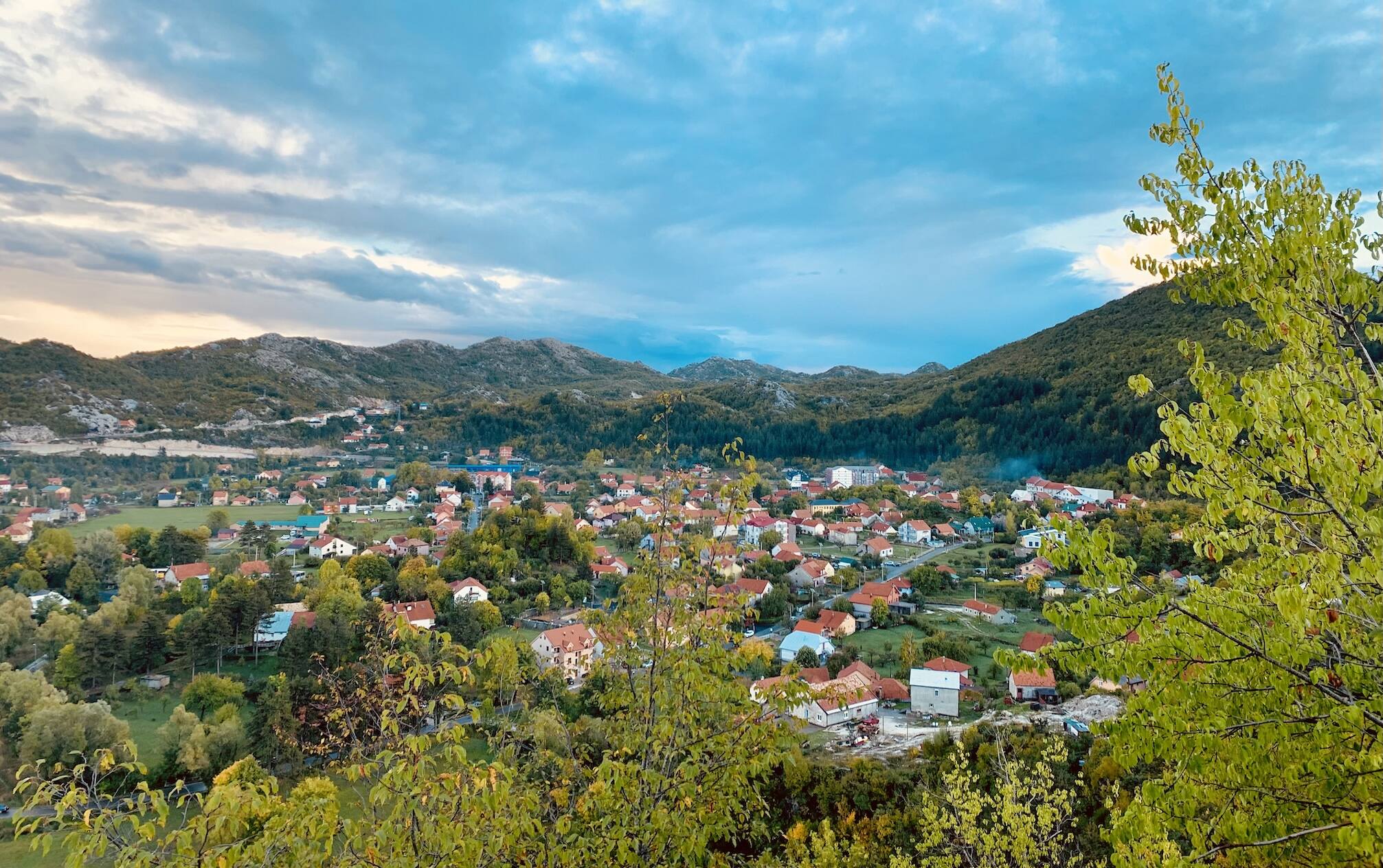
As soon as Sladja and I heard about the town of Cetinje, we knew it had to be a priority of our final weeks in Montenegro. A mountain town thirty kilometres from the coast, a former royal seat once home to kings, queens, princes, and princesses — Cetinje promised a side of the country completely different from our coastal adventures in Tivat, Perast, Kotor, and Budva.

The Royal Capital That Was: Exploring Cetinje.
Thus we took the bus over from Budva one afternoon. It was an unusually grey day as we wound along the mountain road, tucked into the rugged folds of the Dinaric Alps. At last, Cetinje came into view — the little town that had been the beating heart of Montenegro’s royal story from 1697 until 1918, when the country was absorbed into the new Kingdom of Serbs, Croats, and Slovenes.

The Royal Capital That Was: Exploring Cetinje.

Our journey into Montenegro’s regal past began on Njegoševa, Cetinje’s main pedestrian avenue and historic spine — a dense concentration of 19th and early 20th-century buildings, each with a story to tell. The dictionary definition of an open-air museum.

The Royal Capital That Was: Exploring Cetinje.
Ignoring the spitting rain, we began hunting down the many historic edifices. First up was the imposing Neo-Renaissance Džukanović House, built in 1910. It belonged to Marko Đukanović, a civil engineer and President of the State Council.
The Royal Capital That Was: Exploring Cetinje.

Đukanović House.
This grand home was one of many that sprang up that year, reflecting the rising influence of the bourgeoisie in the town. Also in 1910, Prince Nikola I proclaimed himself king, transforming the Principality of Montenegro into a kingdom—so certainly exciting times for little Cetinje.

The Royal Capital That Was: Exploring Cetinje.
Two stone lions guard the entrance, while the house is especially renowned for its female statues representing spring, summer, autumn, and winter. Carved from white concrete, their eerie (to me, at least) gazes evoke the cyclical nature of time and the harmony between human life and the natural world.

Spring says: “You are all going to die”. Thanks, spring.
Next, we paused at the former French Embassy, another 1910 creation involving several notable French architects, including Auguste Perret. The embassy operated for just four years before World War I forced its closure.

The Royal Capital That Was: Exploring Cetinje.
After standing empty for decades, it was reinvented in 1955 as a branch of Montenegro’s National Library.
Former French Embassy.

The Royal Capital That Was: Exploring Cetinje.
Sladja and I weren’t shy about getting up close for a proper look. Happily, some of its original art nouveau flourishes remain—ornate mosaic tiles and decorative ironwork—still full of character, though dulled by time.

Art Nouveau, baby.

Former French Embassy.
Another curiosity is the somewhat sinister Vujović House, which gives off serious haunted-house vibes. Completed in 1930, it was the home of architect Vlado Vujović, who in fact designed the Neo-Renaissance structure himself.

The Royal Capital That Was: Exploring Cetinje.
He wanted it to resemble a castle, hence the dome, poised gables, and round tower. Like many of Cetinje’s historic buildings, it has fallen on hard times and now seems abandoned.

Vujović House.
The rain began to pick up as we continued down Njegoševa. Soon, we passed the imposing Ministry of Culture and Media, housed in the former Presidential Palace.

The Royal Capital That Was: Exploring Cetinje.

Ministry of Culture and Media.
Nearby, we stopped to read a plaque outside a distinctive green building called Mašanović House. It was here, on April 19th, 1920, that police shot dead Marko Mašanović, a leading Montenegrin communist. His death was one of many during a period of harsh anti-communist repression across Yugoslavia following King Alexander I’s crackdown on political opposition.
Mašanović’ House.

The Royal Capital That Was: Exploring Cetinje.
Now, I know it’s a bit of a mouthful, but take a moment to appreciate this next historic home: Duke Šako Petrović Njegoš House. The duke was a respected theologian, military commander, politician, and—wouldn’t you know it—cousin of King Nikola I. In 1906, he became the first President of the National Assembly. No wonder they named the town’s main street after him.

The Royal Capital That Was: Exploring Cetinje.
Cetinje is also home to several museums. On Njegoševa, one of the most prominent is the Money Museum, housed in the former Central Bank of Montenegro. The exhibition includes access to the old counters and vaults, along with displays of rare coins, banknotes, and a fully restored 19th-century minting machine.

The Money Museum.
Sadly, several houses along Njegoševa stood in ruins. To the local council’s credit, however, they’d begun transforming a few into meaningful tributes. Take this former townhouse, for example—then being reborn as a Garden of Memory.

The Royal Capital That Was: Exploring Cetinje.
With flowerbeds, young trees, plaques, and benches on the way, we could sense it would soon become a lovely spot to pause and soak up a bit of calm and nature right off the main street.
The Royal Capital That Was: Exploring Cetinje.

Garden of Memory.
This ruinous structure, meanwhile, was once the home of Jovan Tomašević, founder of the Communist Party of Montenegro. A plaque outside claims he was born here on July 3rd, 1892, though a rival plaque in the village of Gornji Brčeli insists otherwise.

The Royal Capital That Was: Exploring Cetinje.
A short flight of stone steps leads into the hollow shell of the house and an art installation titled Take Me Back Home. Comprised of over a thousand hand-sewn flowers, the exhibition celebrates Tomašević’s life while mourning his early death at just 33.

Jovan Tomašević House.
Suffering from tuberculosis and hounded by political repression, his life ended far too soon—a tragic fate for a man who had studied law in France and fought in both the Balkan Wars and the First World War as a young man.

Jovan Tomašević (1892-1924).
At last, the town’s main street opened onto the pretty Court Square (Dvorski Trg). Peaceful and leafy, the elegant space barely whispers of its illustrious past, having hosted countless state ceremonies. In fact, this was the very spot where Prince Nikola I Petrović-Njegoš proclaimed the Kingdom of Montenegro and became King Nikola I.
Court Square.

The Royal Capital That Was: Exploring Cetinje.
Today, the square also serves as the gateway to the former Cetinje Royal Palace, now a branch of the National Museum of Montenegro. Regal yet understated, this larger-than-it-looks royal residence was built for Nikola between 1863 and 1867.

The Royal Capital That Was: Exploring Cetinje.
With the rain still falling, we were grateful to step inside and pay the modest entry fee of €5 per person. A small price, I’d say, to explore the lavish home where Nikola and his family lived and governed for nearly six decades.

Inside Cetijne Royal Palace.
It was here that the king received envoys, drafted reforms, and guided Montenegro through wars and diplomacy alike.

The Diplomatic Room at Cetinje Palace.
Inside, the museum proved beautifully curated and clearly arranged, with thousands of original antiques, family portraits, royal uniforms, and diplomatic gifts on display.

The ‘Indonesian Salon’: a tasteful space for brandy, a smoke and a natter.
From the many royal biographies, I found myself drawn to the melancholic Princess Natalija Konstantinović. She married Nikola’s second son, Mirko, in 1902, and the couple had five sons, though tragically lost two in early childhood. The grief weighed heavily on her, and when the royal family fled Montenegro during the Austro-Hungarian invasion of 1916, her depression deepened.
The Royal Capital That Was: Exploring Cetinje.

Natalija Konstantinović (1882-1967).
She divorced Mirko within a year, later remarrying the Belgian nobleman and diplomat Gaston Errembault de Dudzeele. She died in Paris in 1950, aged just 67.

Natalija in happier times (1902).

The museum displays one of her dresses, worn on several occasions between 1902-1916.
We spent several hours exploring the palace, particularly fascinated by the royal bedrooms.

Nikola’s bedroom. It was ab absolute bugger tracking down that polar bear and bringing it to Montenegro.

The far more modest Queen’s Bedroom.
Yet, the experience was slightly dampened by the curt woman at the ticket counter and a man who marched across a vast hall to snootily inform me of the palace’s strict no-photo policy. I smiled, waited for him to leave, and quietly carried on with my business.

The Queen’s Reception Room: The Royal Capital That Was: Exploring Cetinje.

The Dining Room: The day where nobody was hungry.
By the time we left the museum, the persistent rain had finally eased. Hungry and thirsty, we stopped at the nearby Scottish Pub Academia for a pizza. The food was decent, the service efficient if a little gruff, and we were tickled by the walls lined with framed Scottish art.

The Royal Capital That Was: Exploring Cetinje.

I was disappointed that they didn’t have a haggis pizza.
Next, we mapped out a walking route to another highlight—or so we were told—the historic and highly controversial Cetinje Monastery. But with plenty to see along the way, it took us a while to arrive.
First, we paused at the Brindisi Boat Disaster Monument, which commemorates over 300 Montenegrins who perished when the Italian steamship struck a mine off the Albanian coast on 6 January 1916.
The Royal Capital That Was: Exploring Cetinje.

Monument to the 1916 Brindisi Steamship Disaster.
The ship was carrying volunteers to the Adriatic front to support Montenegro’s defence, and the tragedy remains one of the greatest in Montenegrin history.

SS Brindisi (1895-1916).
We also stopped at this dramatic statue of Ivan Crnojević, the founder of Cetinje. As the last ruler of the medieval Principality of Zeta, he moved his capital from the lowlands to Cetinje in the late 15th century to establish a mountain stronghold.

The Royal Capital That Was: Exploring Cetinje.
Renowned for his alliance with Venice and resistance against the expanding Ottoman Empire, he is celebrated as a symbol of Montenegrin resilience and independence. What’s more, he even founded the very monastery we were on our way to see.

Ivan Crnojević.
Just before reaching his monastery, we came upon an incredibly picturesque little church. Known as the Court Church, it was built in 1890 by King Nikola upon the ruins of an earlier medieval church. Yes, you can actually see the remains of the original structure surrounding the church.

The Royal Capital That Was: Exploring Cetinje.
Unfortunately, we were unable to enter. Which was a great pity, as it doubles as a mausoleum that contains the remains of none other than Ivan Crnojević and King Nikola I themselves.
The Court Church.

The Royal Capital That Was: Exploring Cetinje.
Somewhat reluctantly, it’s time for me to take you into Cetinje Monastery. According to historians, work on the building began in 1484. Over the centuries, it’s stood as not just a place of worship, but a centre of education and the country’s earliest printing studio.

Cetinje Monastery.
Miraculously, it has also survived a string of Ottoman and Venetian attacks, most notably in 1692, 1714 and 1785. Each time, Montenegrin leaders patiently rebuilt it, determined to preserve their seat of faith and freedom.

The Royal Capital That Was: Exploring Cetinje.
Its most recent restoration dates from the mid to late 1920s. In recent years, however, this remarkable history has been overshadowed by controversies touching on theology, national identity, and the complex historical relationship between Montenegro and Serbia.

The town’s problematic monastery.
On 5 September 2021, just six weeks before our visit, Bishop Joanikije Mićović was enthroned at the monastery, formalising the Serbian Orthodox Church’s longstanding claims to the premises.

The Royal Capital That Was: Exploring Cetinje.
The event sparked widespread protests, with thousands gathering at the monastery. Clashes with police followed, involving rocks, bottles, tear gas, and armoured vehicles, resulting in numerous injuries. Although tensions had eased in the weeks afterward, we still noticed a visible police presence at the main entrance.
Cetinje Monastery.

The Royal Capital That Was: Exploring Cetinje.
That uneasy feeling deepened once we stepped inside the monastery. Moments after I took a photo, an irate priest strode over, declaring that photography was forbidden and accusing me—like so many visitors, he said—of ignorance and disrespect.
He demanded several times to know where I was from. Shaken, we made a quick circuit of the interior before stepping back outside, eager to leave the bad energy behind.

The Royal Capital That Was: Exploring Cetinje.
It was late afternoon when we began climbing Eagle Hill via a pretty woodland trail near the monastery. Perhaps it was the hour, or maybe the persistent drizzle, but the path was largely deserted.

The Royal Capital That Was: Exploring Cetinje.
Also known as Eagle Rock (Orlov krš), the short ascent rises from the southwestern edge of the Cetinje plain. Partway up, a dog appeared—seemingly out of nowhere—intent on guiding us to the summit.

Ascending Eagle Hill.

Our guide.
At the top, a grassy platform offers panoramic views of Cetinje’s red-tiled rooftops and the surrounding hills, with the majestic Mount Lovćen visible in the distance.
The Royal Capital That Was: Exploring Cetinje.

At the top.

Cetinje.

Stunning.
Here stands a small, pavilion-like mausoleum dedicated to Danilo Petrović-Njegoš (Bishop Danilo I), founder of the ruling Petrović-Njegoš dynasty.

The Royal Capital That Was: Exploring Cetinje.
The monument, built in 1896 to mark the dynasty’s bicentenary, features a simple stone sarcophagus on a pedestal beneath a canopy of four slender columns. Danilo was assassinated by a rival clan member on 13 August 1860, aged just 34. His successor was none other than Nikola—yeah, the same Nikola who would later become king.

Danilo I, Prince of Montenegro, painted in 1865.

The mausoleum at Eagle Hill.
With daylight fading, we set off toward our final stop of the day. From the hilltop, we could already see Cetinje’s sculpted Summer Stage below, giving us a clear sense of direction.

The Royal Capital That Was: Exploring Cetinje.
The dog, still loyally watching over us, sprang into motion to lead the way down.

“Follow me…”
It took around ten minutes for us to reach the Summer Stage. Built in 1951 at the foot of Eagle Hill, it was designed to look like an ancient amphitheatre.
Summer Stage.

The Royal Capital That Was: Exploring Cetinje.
They say that at full capacity around two thousand people can be seated here, which must create a fantastic atmosphere for concerts and plays in the summer months.

Sladja wondering when the show is going to start.
With nobody else around, we hung out for a bit taking photos and enjoying the quiet. Soon, we’d head back to the bus station for the journey back to Kotor. But for a few more minutes, Cetinje was all ours.

The Royal Capital That Was: Exploring Cetinje.

Over and out.
Like this? Check out my many articles from across Montenegro.
I’ve been living, working and traveling all over the world since 2001. So why not check out my huge library of travel reports from over 40 countries.



59 Comments
So many gorgeous old mansions. What a great place to just roam the streets. Of all these buildings, Masanovic House appeals to me the most for some reason. Too bad about the over zealous supervisors who stop people from taking pictures. I guess I can see if you were taking silly selfies or Tic Tok videos in the cemetery, I understand, but artfully shot photographs add to the respect for the site. A great tour Leighton. Maggie
Hey Maggie. Glad you enjoyed my tour of Cetinje, it is such a different experience to Montenegro’s coastal cities and towns. I suspect the photo-taking is all about organisations and people who enjoy being authoritative, As you say, there is nothing disrespectful about wanting to take photos, especially when you’re being discreet and ultimately to promote a place to others who haven’t been. Thanks for kicking off the comment thread 🙂
I love the terrific photos and the detailed text you have assembled Leighton. Fascinating and educational. Thanks for posting, a great Sunday morning read.
Thanks! Cetinje doesn’t seem to have many online guides, so hoping this gets a good Google ranking. Cheers, Chuckster.
You really did the place up proud Leighton. It looks like it is situated in a fairy tale setting. Too bad it has become so run down, but upkeep on these places must be very expensive in any economy, let alone the current one. Glad they are doing some facade restoration at least and honouring the history and the citizens. Too bad about the photo police. So many Insta and TT people make it bad for the serious photographers. And, lastly…haggis pizza….not a taste I would like to acquire. Have a wonderful day. Allan
Cetinje definitely was a bit run down, but I must say that it was part of its charm. With all that gorgeous coastline, I’m guessing not that many people take a chance on Cetinje, and that lack of tourist income is probably part of what’s holding them back. Happy Sunday, Allan.
Firstly, Spring is absolutely and utterly terrifying – she gives me the creeps! Cetinje looks a lovely place to explore (and I really hope they continue to restore the buildings to their former glory), and to have it all to yourselves is such a bonus.
You’re right, Spring could have her own horror movie. Building restoration is definitely what Cetinje is most crying out for, I hope they’ve managed to do some in the four years that have since passed. Thanks for reading, Hannah.
A town and so much history I know nothing about, so thank you for the tour and all the details. I really like the close-up photos of the embassy to see the detail in the designs.
Thanks Diana. After all those beach towns it was nice to get a little off-the-beaten track and see another side of Montenegro.
That was a lot of interesting history, royal history as well as the more recent mass protests and the monestary. I am impressed by the interior of the Cetinje Royal Palace. I was surprised about the photo prohibition at the palace and the monestary. I understand it if people take photos with flash. It is a disturbance and can damage certain paintings. But just photos. What is up with that? Anyway, as usual your photos as well as your story is great.
Thanks Thomas, I imagine Cetinje is one of Europe’s least known royal histories. Which admittedly appeals to me. Yes, the no photo stuff was annoying, especially when they were so shitty about it. There weren’t many other people in the palace, so it often felt like we had eyes on us throughout the visit. Still, overall we really enjoyed the visit.
How interesting to see how the town has evolved since its former glory. The evidence of its past grandeur can still be felt and its history lives on.
Thanks Geoff, the history does live on despite the pervading neglect. I hope your Vietnam planning is going well, do drop me a line on WhatsApp when you have time.
A fantastic history lesson for us Leighton! I enjoyed this post! X
Hi Anna, thanks for your message and sorry for the late reply. For some reason your comment went into my junk, only just saw it. Not sure why, that’s never happened before. Appreciate the read and comment as always! 🙂
You managed to see far more of Cetinje than I did – partly because we had less time there (I was on a day trip with a Virtual Tourist group) and partly because we didn’t have just ordinary rain, it was torrential! We did have a tour of the palace but with a very strict and vigilant guide who made sure we didn’t take any photos, so I was impressed by the number you managed to get. We also saw the exterior of the monastery – perhaps based on your account it’s no bad thing we didn’t go inside. But I missed just strolling that main street as you did, which is a shame as I think I’d have enjoyed that most of all, based on your photos. The ruins are very atmospheric and it’s good to see how they are adapting and making use of them to tell the story of the place.
Hi Sarah, I believe you are the only reader on the thread who’s been to Cetinje. I’m sorry that your tour seems to have been a bit of a whistle stop one, that’s a pity. Torrential rain just kills things, what can you do. Glad I was able to give you a look at Cetinje’s historic main boulevard, it’s a really characterful stretch of buildings.
Looks like a lovely town with a deep and interesting history. It’s so odd about the “no photos” policy in several places, and being so harshly enforced. Well done for being a rebel in the museum and carrying on. How long was the bus ride from Kotor? Excellent post, Leighton.
Hi Tricia. I think the bus ride is about an hour and a half. There are some parts of the drive where the road is quite twisty as it ascends, so the bus takes it easy for several stretches. Safety first and all that. I hope you and the family are well across the pond, those Christmas vibes will be kicking in soon.
Thanks so much, Leighton. We’ll be visiting Montenegro in mid-May; can’t wait. I hope you and Sladja are well and also looking forward to the holidays.
Ah, so you’re all booked up? We are really looking forward to the holidays, as this’ll be our first time actually buying a tree, decorations, presents etc now that we have a home.
Well, we have our plane tickets; we’re still working on the rest. How wonderful; I hope you enjoy the holidays and all they offer!
What a fascinating place. They don’t mind being a bit extra, do they? Few figures on a building here, polar bear rug there. Cool to see Perret pop up, I enjoyed discovering his work in Le Havre.
Ah, I love it when we find things that connect our travels, like Perret in Le Havre and Cetinje. Thanks for reading about this fascinating Montenegrin town, Helen.
You guys sure saw a lot! That is frustrating they were so rude about the pictures in both places, I’d be shaken up too. We are but humble bloggers trying to share fascinating places with our friends haha.
Thanks for the empathy Lyssy, the no photos thing and the aggression that goes with it is all so unnecessary. In that museum, for example, which is hardly packed with tourists, you’d think they’d be grateful for the free marketing. Silly. Thanks for checking in Lyssy, I hope you are enjoying all those special Christmas vibes in NYC.
Mmmm, and I thought monasteries were places priest prayed and meditated. It obviously wasn’t working for that priest.
Yes, I remember looking at that horrible man with his twisted, angry features and thinking: a man of the cloth, eh? A man of god? Hm.
Very interesting history of this area, and that is also crazy that they would not let you take photos!
Thanks for reading, Allie! 🙂
well leighton this certainly is a different side of montenegro and one that provides a fascinating contrast to the coastal scene. did i know that montenegro had a royal family? i did not. there is always something appealing about towns that were once powerhouses but have now fallen on hard times. the crumbly neglect mixed with hints of former glories can be so characterful and that comes through here. the rain on the day of your visit only adds to that melancholy i’d say.
Hey Stanley. I’m glad you enjoyed a break from all those coastal strongholds. I certainly didn’t know Montenegro had a royal family before visiting the country either. I agree that the melancholy of such places is appealing, or at least to me. Others might grumble and say: “Oh, it’s a bit run down isn’t it?”
Good call on finding time to visit Cetinje before leaving Montenegro. Despite the rain, it seems like you had an enjoyable time wandering around and seeing several historic houses. It’s great to hear that they’ve been transforming some of the ruins to meaningful spaces. Not a fan of the rudeness around the no photo policy, especially at the monastery. Beautiful views from the top of Eagle Hill.
Thanks Linda. Cetinje may not have served up the friendliest people in Montenegro, but we’re so glad we took the time to get out there and get a different perspective of the country and its history. Cheers!
Just read your Cetinje piece. You have crafted such a beautiful capture of a royal town vibe: that open-air museum feel never gets old. Thanks for a great read and with such a gallery of images. Cheers!
Cheers Mateo, I’m glad you enjoyed the post! 🙂
What an interesting tour around Cetinje. There are those clearly royal places, but then there some that are more suited for a.scary movie. I’m with you about the statues of the women- spring looks more eerie than anything. The monastery is really lovely and the views of the area from above are beautiful. Great piece Leighton 🙂
Hey Meg. I do agree that Cetinje would be a good location for a horror movie. Thanks for reading about this underrated corner of Montenegro 🙂
Cetinje was obviously a real find, Leighton, with its fascinating history, intriguing historical buildings, and curious details.
Thanks Annie, it’s a fascinating and often overlooked corner of Montenegro. It’s a pity that not many tourists drag themselves away from the beaches to take a look.
So true, Leighton, as the beaches are just a small part of Cetinje’s attractions.
A whole other side to Montenegro Leighton as you say. You managed to capture Cetinje’s royal essence with all those crumbly buildings and their potted histories. The palace tour looked fascinating, even if the mood was soured by Mr. Don’t Take Photos. These people, seriously. Perhaps if more people came and took photos, they’d get more visitors. Glad your local dog guide got you up and down Eagle Hill safely.
Thanks James, Cetinje served up a great visit despite the unfriendly people encountered along the way.
Thank you for a detailed history and pictures of Cetinje. Very informative and thoughtful comments.
Thanks for reading, and taking the time to leave a comment. 🙂
This was such a rich mix of history and atmosphere. The way you move from royal residences to quiet streets really captured that ‘second layer’ of a place that most visitors never see.
Hi, L. Thanks for your kind words, I did try to get under the skin of Cetinje a bit, I’m glad that came across.
An interesting city to visit, one to remember when I visit Montenegro. I enjoyed the beautiful houses in the city and noticed that you mentioned Auguste Perret, one of my favourite architects, particularly for his work in Le Havre.
Ah, another crossover, I do enjoy it when these links crop up between bloggers and blog posts. I have just Googled Perret’s work in Le Havre, I can see why you’re such a fan.
Thank you for your reply. I have featured Le Havre several times in the Picture of the Day, notably in May 2024 with the architecture of Auguste Perret.
You’ve found dark stories to tell about so many of those old buildings. Always entertaining, I enjoyed this post, Leighton.
Hey Ruth, thanks for reading about our time in Cetinje. Sorry for the late reply, I have been off of WordPress for the past month or so, but hoping to get back into posting and reading come January. I hope you had a Merry Christmas, and all the best in advance for 2026!
Thank you for sharing your piece. I don’t know much about Montenegro so it was a pleasure to read.
I’m so glad you enjoyed the read. Thanks for stopping by and taking the time to comment 🙂
Lovely writing and photos about a place I have never heard of. Thanks for the tour and for all the curious history. Cetinje looks like one of those peaceful n unique places that keeps on ticking by without much fanfare.
Thanks for your message, sorry about the late reply. I’m glad you enjoyed reading about Cetinje, a curious locale whose once grand royal history doesn’t seem to pry that many people away from Montenegro’s spectacular coastline. Cheers!
What drew you to Cetinje initially – was it the royal history or something else? 🤔
Hi Marcus. Definitely its history and architectural pull as a former royal seat. And partly because much of our travels around Montenegro had focused on coastal towns and villages, so it was a great contrast to head inland into a valley town.