
Once Upon a Time in Hong Kong.

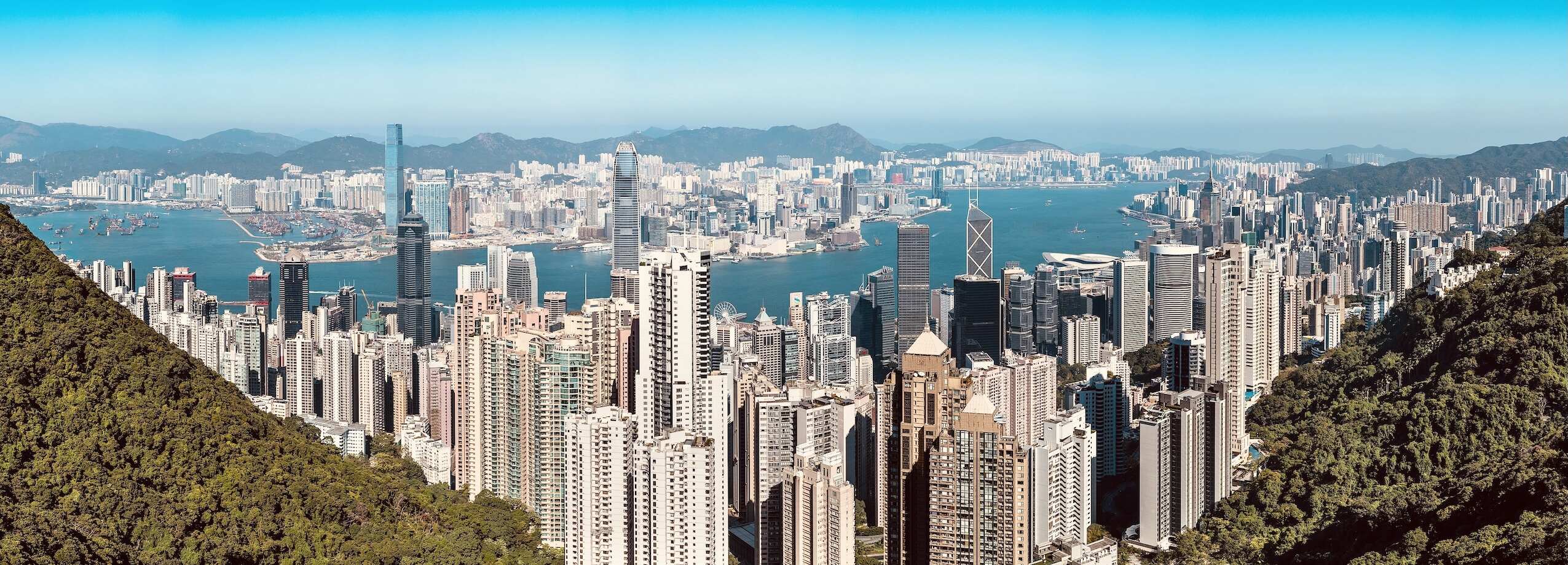
Once Upon a Time in Hong Kong.
May 2010.
I had high hopes for Hong Kong. Partly because, well, it’s Hong Kong. But also because I knew this would be the last hurrah of my 2009-2010 travels around China. Over the preceding year, I’d crisscrossed the country and battled my way through what can only be described as the mother of all culture shocks while living and teaching at a small English language school in Beijing.

My final stop, this vast city with a rich international history, would surely be a piece of cake to navigate compared to the isolated rural outposts I’d found myself in before. Convinced I would almost certainly never return to China (how little I knew), I arrived feeling positively giddy at the possibilities of the four days ahead.

Once Upon a Time in Hong Kong.
Photo courtesy of Benh Lieu Song.
I’d secured digs at the somewhat surreal Hong Kong Hostel in the trendy Causeway Bay neighbourhood on the northern shore of Hong Kong Island. I say surreal because its dorms were spread across numerous floors of a gargantuan residential tower block.
My own tiny, cupboard-sized room sat next to an equally miniature studio apartment housing a family of four. Before long, I’d gotten used to exchanging morning greetings with the mum and kids as they headed out on the school run.

The entrance to my secret hostel.
I knew something was off the moment I arrived. First, there were no signs whatsoever indicating that the hostel was even in the building. Then came the posters in the corridors, openly instructing guests to “please respectfully be quiet as you come and go. This is not a registered hostel!” Another warned that my stay was “at your own risk.”
Once Upon a Time in Hong Kong.

The location, at least, was on the money. I found Causeway Bay to be a glitzy, central district packed with boutique stores, European-style cafes and a wide array of international restaurants. After my recent adventures in the farmlands of Guangxi, it was a treat having so much at my fingertips.

Once Upon a Time in Hong Kong.
On that first day I pounded the streets with no particular plan. At the southern edge of Causeway Bay, where it begins to blur into Wan Chai, I was surprised and delighted to stumble upon none other than Leighton Road. Needless to say, I felt compelled to immortalise this auspicious meeting of Leightons.

Once Upon a Time in Hong Kong.
If that wasn’t enough, I soon realised the road formed part of an unofficial Leighton District, if you will. Next, I spotted a luxurious residential complex called Leighton Hill, set on an actual hill called—wait for it—Leighton Hill. Yes, really. As I passed, a gardener was out front, methodically trimming the hedges by the main entrance.

Once Upon a Time in Hong Kong.
According to various records, the Leighton in question was a wealthy merchant of the 1840s. He must have been quite the figure in his day, as I also came upon a commercial building called the Lippo Leighton Tower.
Most interesting of all, however, was what I learned about Leighton Hill. During World War II, a number of air-raid shelters were constructed at the foot of the hill, and saw particular use during the Battle of Hong Kong.
Once Upon a Time in Hong Kong.

Not sure precisely what I’m doing with this pose, but I guess it made sense at the time.
Leaving Leighton Hill behind, the tower blocks grew denser, less polished, and the traffic picked up considerably. Within minutes I was passing the immaculate greens of the Craigengower Cricket Club, where local seniors had gathered for a game of lawn bowls.
Bowls in Hong Kong is a curious legacy of the colonial era, introduced by the British in the late nineteenth century and long associated with the private members’ clubs of expats and wealthy locals.

Once Upon a Time in Hong Kong.
A few minutes later I paused to take in Hong Kong Stadium, originally built in 1953 as a modest government facility. It underwent a major redevelopment in 1994 and is now a 40,000-seat venue that hosts matches for the Hong Kong national football team, known as Hong Kong, China. The city’s annual Hong Kong Sevens rugby competition takes place here too, along with plenty of concerts.

Once Upon a Time in Hong Kong.
From the stadium I set off on a long, unhurried saunter to Sheung Wan, home to several sights I wanted to track down. It was quite the walk, around five kilometres, and at my leisurely pace it took a full hour. Halfway, I stopped to buy some fruit and nuts from a street vendor.

Once Upon a Time in Hong Kong.
Eventually, I reached my first point of interest: the tiny but atmospheric Man Mo Temple on Hollywood Road. Dedicated to Man Cheong, the god of literature, and Mo Tai, the god of war, the temple was built in 1847 as both a place of worship and a community court where locals settled disputes and swore oaths before the gods.
Man Mo Temple.

Once Upon a Time in Hong Kong.
Inside, it was smoky and dimly lit, the air thick with incense, freshly cut flowers, and overripe fruit. The incense drifted down from large spiral coils hanging from the ceiling, many of which burn slowly for days, if not weeks. A recording of murmured prayers filled the space. I was the only person in the hall.

Inside Hollywood Road’s Man Mo Temple.
While I didn’t know it at the time, there are a number of Man Mo temples scattered across Hong Kong, and this is the largest. Outside, in the courtyard, I discovered an arresting, mosaic-like wall of ancestral memorial tablets. Each bore a carved name, dates of birth and death, a short dedication, and a small black-and-white portrait. I took a moment to lose myself in the faces. Lives lived and all that.

Once Upon a Time in Hong Kong.
A short distance away, I found myself quickly swallowed up in the teeming lanes of Graham Street Market. Dating back to the mid-19th century, it is—some say—Hong Kong’s oldest surviving street market. It grew alongside the city’s early colonial expansion, evolving into a lively wet market supplying fresh meat, fish, fruit, and vegetables to local residents.

Once Upon a Time in Hong Kong.
Once home to the historic Bijou Theatre (now sadly closed), this is so much more than a street market. In fact, it is considered one of Hong Kong’s most treasured historic and cultural areas. Queen Elizabeth II paid a visit to chat with locals in 1975, and Jackie Chan shot a scene of Rush Hour 2 here in 2001. Terrible film, by the way.
Once Upon a Time in Hong Kong.

Every bit bas bad as it looks.
Set along the steep streets between Central and Sheung Wan, Graham Street Market still remains a fixture of everyday Cantonese life and is one of the city’s most popular lunch and dinner spots.

Graham Street Market.
Having rapidly dispatched a delicious, steaming bowl of fried pork and mushroom dumplings, I realised I was standing beneath a section of the iconic Central–Mid-Levels Escalator. Stretching over 800 metres, it is the longest outdoor covered escalator system in the world.

Once Upon a Time in Hong Kong.
Opened in 1993, it eased what had once been a steep climb between the main business district and the residential Mid-Levels above. Naturally, I decided to hop on and experience it for myself. As I ascended, there were glimpses of the lively market lanes below, alongside a steady run of advertisements from local businesses.

On the Central–Mid-Levels Walkway.
A little later, I joined the crowds on Nathan Road, Hong Kong’s frenetic shopping artery. Think London’s Oxford Street, and you’ll get the picture. I spent the rest of the day wandering its one-mile stretch, ducking in and out of stores and grabbing the occasional bite.
Once Upon a Time in Hong Kong.

Once Upon a Time in Hong Kong.
Somewhere amid the chaos, a beaming groom-to-be stopped me with a cheerful, “Excuse me—good afternoon! Did you know I’m getting married today?” Dressed in a richly embroidered red jacket and gold waistcoat, he looked every bit the part. He was clutching a wedding book, which he asked me to sign, as a way of wishing him good luck.
An entourage hovered nearby, including a photographer capturing our exchange. It was an unexpectedly warming, if slightly bizarre, encounter—one to file under Only in Hong Kong, I figured.

Once Upon a Time in Hong Kong.
As night fell, the street’s neon lights flickered to life, and it was easy to see how Nathan Road earned its nickname: the Golden Mile. Enjoying the vibe, I grabbed dinner at a noodle joint before heading back to my cupboard.

Nathan Road by night.
On day two the goal was to take in a few of Hong Kong’s loveliest green spaces. I began the day at Hong Kong Park, a green pocket carved into the city’s steep hillside.
Opened in 1991 on the former grounds of Victoria Barracks, the space blends colonial remnants with modern landscaping. I’m talking arched brick buildings and old military structures sitting among water features and dense tropical plants.

Once Upon a Time in Hong Kong.
Meticulously kept, with neat lawns, trimmed hedges, and well-tended flower beds, I followed the park’s winding stone paths, passing sculptures, waterfalls, and koi-filled ponds. Its most surprising feature was the Flagstaff House Museum of Tea Ware—trust the British, eh?—unfortunately closed that day.
Hong Kong Park.

Once Upon a Time in Hong Kong.
In the distance, the towering Lippo Centre rose seemingly out of the greenery. Completed in 1988 to a design by the American architect Paul Rudolph, locals call the corporate office complex the Koala Tree, due to its protruding, pod-like windows. Which, I suppose, brings to mind koalas clinging to a pair of twin trunks.

Once Upon a Time in Hong Kong.
But my Hong Kong Park highlight was the magnificent Edward Youde Aviary. Opened in 1992, it is a vast, walk-through enclosure where birds move freely around and above you. Approximately 600 birdies from across 80 species live here, amid dense plant life, wooden walkways, and a suspended bridge that lifted me up to canopy level.

Once Upon a Time in Hong Kong.
Sir Edward Youde was a British diplomat and Sinologist (expert on all things China) who served as the governor of Hong Kong between 1982 and 1986. Moreover, he was a keen bird watcher, hence the posthumous dedication.

The white bird with the blue flourish is the endangered Bali Myna, native to Indonesia.
Free to enter and wonderfully quiet, I stayed awhile to observe some of the most exotic birds I’d ever seen. Remarkably tame, they perched just a few metres away, completely unflustered by my presence.
The Edward Youde Aviary.

The blue dude is a Victoria Crowned Pigeon, native to New Guinea.
On the way out, I came upon a local pensioner asleep on a bench by the exit gate. A perfect snapshot of the park and its aviary.

Once Upon a Time in Hong Kong.
The moment I arrived at Kowloon Park, I could tell the vibe was wholly different. There were people everywhere: picnicking families, joggers, dog walkers and old men playing chess, in addition to baseball-cap-clad teenagers skating by on all manner of contraptions.

Once Upon a Time in Hong Kong.
The place positively bristled with energy; a sizeable group dance was even taking place across the main square, set to what I remember as Latino music.

Kowloon Park.

A pair of local men watching the dancing.
Opened in 1970 on the site of another former British military post (this time Whitfield Barracks,) the park has a network of landscaped gardens, tree-lined paths, and ornamental ponds, alongside a large swimming complex.

Once Upon a Time in Hong Kong.
The biggest crowd in the park that day had gathered to watch a traditional Chinese Lion Dance performance. Accompanied by the steady pulse of drums and the sharp clash of cymbals, performers in bright uniforms moved through a series of choreographed routines, blending elements of dance and martial arts.
Once Upon a Time in Hong Kong.

Lion Dance fun at Kowloon Park.
The lion’s head: ornate, wide-eyed, and trimmed with fur, rested briefly between sequences before springing back to life, animated by the movements of the performers beneath. Interestingly, I read that such a performance had taken place on the day of the park’s opening, forty years earlier.

Once Upon a Time in Hong Kong.
Before leaving, I spent some time photographing people, as clandestinely as I could. Sometimes with great success…

Easy pickings.
…other times far less incognito than I would have liked.

You win some, you lose some.
Day three took me to Victoria Harbour, one of the world’s great natural harbours, alive with ferries, cargo ships, and traditional junks. Framed by forested hills and a forest of glass towers, it played a central role in Hong Kong’s rise as a global trading hub under British rule.

The Hong Kong Exhibition Centre: has something of a Sydney Opera House vibe to it.
It was here that I meandered along the curious Avenue of the Stars, Hong Kong’s answer to the Hollywood Walk of Fame. First opened in 2004 and revamped in 2019, it celebrates the city’s rich cinematic heritage, with handprints and tributes to its legendary figures.
Avenue of the Stars.

Once Upon a Time in Hong Kong.
Admittedly, I couldn’t help but giggle at some of the names: Sir Run Run Shaw and Li Tit to name a few. Not being an expert on Hong Kong cinema, most of the names meant little to me, though I did get a kick (no pun intended) out of tracking down Bruce Lee and Jackie Chan.

The one and only.

Avenue of the Stars.
That evening, I stepped out of my comfort zone for a night of horse racing at Happy Valley Racecourse. I had never seen live racing before, and while I wouldn’t call myself a fan of the sport, I was really into the British Grand National as a kid. So I thought, what the heck.

Once Upon a Time in Hong Kong.
Dating back to 1846, this iconic venue sits tucked beneath a ring of towering high-rises in the Happy Valley neighbourhood, just inland from Causeway Bay. Unfortunately, the weather didn’t play ball. It rained, and rained, and rained, though I did manage to acquire an umbrella from a friendly steward.

I placed bets on six races that night and watched each one with mounting anticipation. I had already resigned myself to losing, and that’s exactly how it played out—not so much as a second or third-place finish to celebrate. Still, I enjoyed the evening greatly, not least for the chance to observe the local punters.
Once Upon a Time in Hong Kong.

Happy Valley Racecourse.
They were exclusively older men, rows and rows of them sat shoulder to shoulder, hunched over newspapers dense with form guides. They circled names and made notes, silently working through their calculations with an intensity that felt almost ritualistic. Nobody ever smiled, so it was hard to tell whether anyone had enjoyed a successful night.

Once Upon a Time in Hong Kong.

Decisions, decisions.
I really went for it on my last day. Dragging myself out of bed just after sunrise, I set off for Lantau Island, a journey that took me by MTR and then on a thrilling 25-minute ride on the Ngong Ping 360 Cable Car.
It lifted me out of Hong Kong’s glass jungle, over the airport, and into the deep green folds of the island. From there, it was a mere ten-minute walk to the base of the staircase leading up to the Tian Tan Buddha.

Once Upon a Time in Hong Kong.
The 268 steps took me to the humongous statue better known as The Big Buddha. Seated in calm permanence above the Ngong Ping plateau, it is one of the largest seated bronze Buddhas in the world. Its name, Tian Tan, refers to the Altar of Heaven in Beijing, while the design blends spiritual reverence, imperial symbolism, and a sense of cosmic order. Groovy.

Once Upon a Time in Hong Kong.
The Buddha’s scale is undoubtedly impressive, but for me it was the sense of calm up on the viewing platform that appealed the most. Facing north, the Buddha seemingly sits watching over the mainland, his right hand raised in a gesture of reassurance: “It’s going to be ok, people.”
The Big Buddha.

Once Upon a Time in Hong Kong.
Around him stand six smaller bronze devas, celestial beings drawn from both Buddhist and Hindu traditions. Furthermore, each presents an offering: flowers, incense, music, ointment, fruit, and a lamp. All are in quiet devotion to the Buddha. Together, the arrangement is known as The Offering of the Six Devas.

Once Upon a Time in Hong Kong.
Beyond the devas, meanwhile, the view opens across lush green mountains, dominated by the towering form of Lantau Peak. At 934 metres, it is the island’s highest point, and just looking at it made me wish for one more day so that I could hike its slopes.

Lantau Peak.

Once Upon a Time in Hong Kong.
From there, I jumped on the number 21 bus, which wound its way down the western side of Lantau, hugging green slopes and treating me to occasional flashes of coastline. Along the way, the road twisted through drowsy communal pockets, before eventually descending into the fishing town of Tai O.

Once Upon a Time in Hong Kong.
Often referred to as Hong Kong’s last traditional fishing outpost, Tai O is a place where daily life clings to the water. Here, stilt houses stretch across tidal flats, their weathered wooden frames at times looking as though they might topple altogether.

Tai O.
I took a walk down the so-called main street, which was little more than a collection of market stalls, a cafe and several restaurants.
Once Upon a Time in Hong Kong.

Once Upon a Time in Hong Kong.
Most of the stalls specialised in dried seafood snacks: shrimp, squid, scallops, and starfish, stacked in trays and sealed into clear plastic bags. They were certainly odd-looking, their colours ranging from pale ivory to soft pink and deep amber. No, I didn’t feel particularly tempted.

Tai O Fishing Town.
I decided to stop into the cafe and rest for a bit. The air carried that unmistakably salty tang as I sat by the water with my coffee, watching fishermen’s boats coming in and out.

Once Upon a Time in Hong Kong.
Back into the streets, my wanderings took me to a number of quiet residential lanes beyond the main stretch. They felt wonderfully authentic, with mums hanging up laundry and children playing with their toys in open doorways. In several yards, instead of laundry, fish had ben hung out to dry.

Tai O Fishing Town.
In another, a man sat patiently mending a section of his fishing net.

Once Upon a Time in Hong Kong.
Before long, I came upon a sign advertising boat tours around the Pearl River Estuary. I did not hesitate in grabbing a ticket for the next cruise. What followed was a delightful forty-minute chug that took in the mountains, a fine view of the Big Buddha and, most delightful of all, a few fleeting glimpses of jumping dolphins.
Pearl River Estuary.

Once Upon a Time in Hong Kong.
Back in Tai O, another bus (this time the No. 11), carried me to Cheung Sha Beach in a swift thirty minutes. The sands lay almost entirely deserted, and my long walk along its largely unspoilt stretch soon became the highlight of the day.

Once Upon a Time in Hong Kong.
In fact, the experience was so perfect that I chose to walk all the way to the jetty town of Mui Wo, from where a ferry would carry me back to Hong Kong Island. It took around an hour and a half, and although I savoured every second, there was a quiet sense that the fading light was carrying my time in Hong Kong—and China as a whole—away with it.

Light falling over Cheung Sha Beach.
It was dark by the time I reached Mui Wo. I had eaten little all day and was ravenous. So with an hour to spare before the next boat, I found a restaurant overlooking the water and settled in for a grand farewell dinner to China. The very next day I would be returning to Europe—to Amsterdam—where an entirely new chapter, both professionally and personally, lay in wait.

Once Upon a Time in Hong Kong.
Like this? Why not check out more of my travel articles from across China.
I’ve been living, working and traveling all over the world since 2001. So why not check out my huge library of travel reports from over 40 countries.



51 Comments
You did Hong Kong well Leighton. That sign in the Hostel is pretty scary. Did you ever find out what that was about? Good on you for finding all the Leighton places. We always find references to our last name wherever we go. Hong Kong is certainly a study in contrasts and hopefully China will never destroy that part of this place. We were there in 1982 on tour and not back since, so thanks for the update. Enjoy your weekend Leighton. Allan
Imagine the changes that took place across the city from 1982 to 2010. And then over these past sixteen years. As you say, we can only hope it retains many of the special elements that made/makes Hong Kong so special. I never did find out more about the hostel, I assume they are legit now as they still seem to be operating and, I assume, couldn’t get away with that these days. Have a great Saturday, Allan.
I enjoyed this immensely Leighton! Not least because we hope to return to Hong Kong some time next year if we manage to pull off a potential trip to New Zealand. We were last there in the mid 1990s and it will have changed a lot, I know. I especially liked the sound of your final day, with the visit to the Big Buddha and to Tai O. I was also rather taken with that Bali Myna bird!
Thanks, Sarah. Hong Kong was/is, I feel, a bit special. I’m sure you will really enjoy your time there. It was such a contrast from my experiences in last Sunday’s post with the long-haired ladies and the rice terraces. These great contrasts are one of the many things that make travel so special. Would be interesting to see if you also manage to spot a Bali Myna bird in the aviary.
I’ll let you know!!
The islands, boat trip, cable car to Buddha, yes. But the city and that mass of humanity, no thanks. Way too many people but undoubtedly an experience xx
Yes, big city, lots of people, etc. Though the only time I felt it got too much was Nathan Road. Still, so many rewards for those who brave it: cultural, historical, artistic, gastronomical and so on. Away from the main island everything becomes much calmer, more beautiful and easier to appreciate. The best of both worlds in my book.
I think that would be an amazing experience! I may just have to tackle that myself. Chuckster, losing himself in a mass of humanity.
If one truly has to lose oneself in a mass of humanity why not Hong Kong eh? Thanks for stopping by, Chuckster. 🙂
My trip to HK was quite brief, and while doing seminars. Your memories are more expansive than mine. Tricia did join me and we saw a bit. I remember the bird markets. What I remember as well is that I, who has never had even a slight hint of asthma etc., would start wheezing after an hour outside, we had to go into a building with AC for it to clear. Never has anything like that happened since. But that was 30 years ago. Thanks for the photos and the stories.
Thanks for sharing your recollections Terry. I can’t say I noticed a major air problem in Hong Kong, but then I had just completed a year living in Beijing where the air quality was diabolical, and often fatal for a portion of the city’s ageing population. Despite all the changes in recent years, I would love to give the city another look over one of these years.
We were there before HK reverted back to China, so i am sure it is different
Yes, you mentioned in your original comment, thirty years ago.
You really got around the country that year Leighton. I don’t think you could have had a greater contrast than between those mountaintop villages and Hong Kong. The Leighton district was an unexpected surprise, as was the quirky experience with the groom. The main island looks thoroughly absorbing, though your photos and description of Lantau have me wondering about all the other islands, which I’m sure are just as worthwhile to explore. Where are you taking us next?
If I ever get back to HK, I’d definitely like to see a few more islands, particularly Lamma and Peng Chau. Next up is a blogging break and then one of Sladja and I’s recent (ish) travels. Somewhere in Europe…
You know, Leighton, it was mostly because of my brother’s urging that I went to Hong Kong. He had spent several months in Wuhan on business, but he loved his time in Hong Kong at the end of his time there. He encouraged me to go when he heard Terry would be there on business; and our mom would be there on vacation. Your wonderful post brought back some memories of my short time, but helped me realize it was an excellent opportunity. If he was alive today, I can imagine him writing a similar post to yours about his experience there, as he was so intelligent and articulate, and almost as amusing as you. 😉 Thanks so much for the memories.
What a lovely comment Tricia, thanks so much. I guess that if you do plan a trip to China, a return to HK would be need to be included in the itinerary. You’ve got a bit of history there after all. Not sure if you saw last week’s post about the long-haired ladies, but I suspect that it’s a corner of the Guangxi region that might greatly appeal to you guys. In any case, that’s a wrap for my China 2009-2010 series. Time for a blogging break now, I really do need to get on with my novel. Take care over there.
I think I may have missed your post from last week; I’ll take a look. I’ll miss your weekly posts, but best of luck with your book; I’m looking forward reading it.
Nice to be reminded of such places. I was there in 2007 to visit my dsughter who was working there. I bet it has changed a lot now, Then of course it was still under British rule!
It seems most readers have been to Hong Kong, I’m guessing mostly because of its colonial history and those familiarities and comforts that are often missing across mainland China. I think it actually went back to China in the late 1990s. Chris Patton, and all that.
Hong Kong is such an amazing place. I’ve only been once but would love to return. Your visit in 2010 doesn’t look too different to mine in 2023. I also spotted Leighton Road and thought of you, and you did have me chuckling at the meeting of the Leightons… and your Rush Hour 2 comment – absolutely awful wasn’t it! 🙂
That’s very interesting Hannah that my 2010 visit doesn’t feel a world away from yours in 2023. Yes Rush Hour 2 is absolutely bobbins, though Jackie Chan is a bit of a legend I suppose. Thanks for reading!
That’s a bit sketch to stay in a hostel that’s not registered, but it sounds like you were fine. How fun that you managed to find a street, district, hill and building that shares the same name as you! Sounds like there’s quite a range of activities and things to see in Hong Kong. Loved the beach walk at the end of your trip.
Thanks for reading Linda, Hong Kong is a special place and such an entirely different beast to any of the big cities across mainland China. The closest to it is maybe Shanghai.
So many Leightons ha, this visit was meant to be! So many sights to see in bustling Hong Kong, that aviary looks like it would be a top spot on my list.
No Leightons in the aviary though, sadly. Thanks for reading about my time in Hong Kong, Lyssy.
So many things named Leighton – it seems you’ve stumbled upon your place! Hong Kong looks like a fascinating mixture of ancient and modern life.
It’s one of the world’s great cities for sure. Thanks for looking through my Hong Kong adventures, Diana.
Great post , I would had love to go into the city but sadly no time to get out of airport. Thanks for the memories thus Cheers
Thanks for reading! 🙂
You are welcome
What an incredibly-packed time in Hong Kong! It’s a place I’ve yet to visit, and it looks like you had a good time. How funny you got to see your “namesake” in the city lol, as well as see the iconic Tian Tan Buddha. Did you have some tasty dim sum while there? A nice way to close out your China adventures, and we await your time in the Netherlands!
Somehow I thought you’d been to Hong Kong, I must have misremembered. I believe I did indeed have some dum sum, though I have no idea what happened to pretty much all my food photos from those days. Thanks for reading Rebecca.
a wonderful closing post to your china travels from this period leighton. i am mindful how long this project has taken and that you actually had several more years teaching in china and travelling around the country. i look forward to those posts with much curiosity about where you went. hong kong looked like the perfect way to mark the end of your first year your final day being particularly magical. leighton on leighton road feels like a blogging landmark!
Thanks Stan, it’s another batch of blogs completed indeed but unfortunately still a drop in the ocean of what still needs to be done. Sigh. A break now and then back to it with a new country. Thanks for following along, as always! 🙂
wow- not only a road but an entire district that shares your name! That is really amazing and I am glad you documented the moment with a picture. This was a great tour around Hong Kong with you. I loved the mix of the well known places and the not as well known and the moments of real life all together. But the fact that you stayed in that hostel that may or may not have been legit- what an adventure. If it says you stay there at your own risk who knows what you would get.
Hey Meg, I’m glad you enjoyed this tour around retro Hong Kong. A very different feel to the place these days, I imagine. Yes, reading the “at your own risk” sign was certainly a first, and thankfully, a last. Cheers! 🙂
You’ve made the most of your time in Hong Kong; it’s true that there’s so much to see and do on this bustling island.
It certainly has a lot to offer. Thanks for checking in.
Thanks for sharing, Leighton. This was such a fun read! One of my favourite trip reports yet! So many hilarious moments, including that very shady hostel sign – which I was happy to read from your comments that they are still operating – hopefully legally and unhidden now. The pose at the Lippo-Leighton tower makes sense to me NOW and I don’t know how or why! I visited Hong Kong for the first time last year and it was lovely to see some of the changes that have happened over the years and some that have pretty much stayed the same
Ha ha, thanks for the photo validation, much appreciated 😉 Glad to hear you have also experienced Hong Kong, it’s definitely one of the world’s great cities.
I so enjoyed this post. How fun to find those sites and an entire district named for you! Strange about the hostel signs, good that you were able to find a room there. I’d love to wander those street markets. The island trip seemed a lovely end to your China time.
Thanks Ruth, Hong Kong was a great time, but startling for me to realise this was sixteen years ago. Thanks for the catch up! 🙂
Hong Kong looks like such an interesting place to explore. That was sweet that the one guy wanted you to sign his wedding book! It seems like such a busy and bustling spot with so many markets to see.
Hong Kong was a great time Allie, I’d be interested to see how much it has changed since all the upheavals in recent years. Cheers!
Really enjoying your blog! Your style stands out from others which all seem to have the same generic titles and lists of “best” things to do blah blah blah. Been reading your China posts, very enjoyable!
Thanks so much Este, I’m glad you are enjoying your reading around the site. I have the same feeling as you about the generic cookie-cutter approach to blogging!
Great post Leighton. Your blog is always, interesting and informative with a compelling personal touch. I’ve enjoyed several trips to Hong Kong, but your have found sights and activities I never knew about. This info will come in handy for my trip there in a few weeks.
John! Lovely to hear from you, it’s been such a long time. Are you still active on WordPress? I am on an extended blogging break myself as life has got too busy and what with the World Cup and workingo n my novel, the blog had to take a backseat for a while. Appreciate the read and comment, cheers.
I’m doing great despite the crushing WC defeat. Much has happened in the last two years. I hope to find time to share on WP.
Mm yes, I caught up with that this morning. I think a certain idiot president did not do his country any favors. I would very much like to read about your journey these past few years, I know that things have been far from smooth for you.